

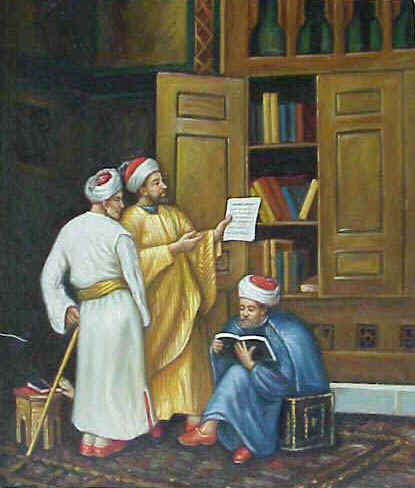
From the earliest days of Islam, knowledge has been at the heart of our faith. The very first revelation to the Prophet Muhammad ﷺ began with the command “Read!” (Iqra). This set the foundation for a civilisation rooted in learning, writing, and preserving knowledge. Throughout the centuries, scholars, scribes, and publishers dedicated their lives to ensuring that Islamic books and teachings were passed down from generation to generation.
A Civilisation of Books and Scholarship
Islam is often described as a ‘civilisation of the book’. The Quran, the ultimate source of guidance, was carefully compiled and preserved, followed by vast collections of Hadith, Fiqh, spirituality, and even works on science, mathematics, and philosophy. Muslim libraries in Baghdad, Cairo, and Cordoba became centres of learning for the world. Manuscripts were copied by hand, often beautifully decorated, and circulated widely.
This rich tradition shows that Islamic scholarship was never meant to remain hidden; it was to be published, shared, and made accessible to all.
Why Islamic Publishing Matters Today
In today’s world, publishing remains one of the most powerful tools of Dawah. Islamic books are not just sources of knowledge; they are instruments of change. Through Islamic publishing, we preserve authentic teachings, challenge false narratives, and inspire new generations.
Key benefits of Islamic publishing include:
Preserving authentic knowledge: Safeguarding the Quran, Hadith, and classical Islamic scholarship.
Promoting accessibility: Making Islamic books available in multiple languages for Muslims worldwide.
Countering misinformation: Providing authentic resources against Islamophobia, secularism, and misrepresentation.
Nurturing Muslim authors: Supporting a new wave of writers who carry the message of Islam.
Challenges and New Opportunities
Unlike our predecessors, who copied manuscripts by hand, we have modern printing presses, e-books, and audiobooks. Yet challenges remain. Mainstream publishers rarely support Islamic books, leaving Muslim authors without the backing they need.
At the same time, technology has opened new doors. Digital publishing allows us to reach global audiences instantly. Online platforms, e-book stores, and even social media campaigns are helping spread Islamic knowledge faster than ever.
Reviving a Sacred Responsibility
Reviving Islamic scholarship through publishing is not just an option; it is a sacred duty. Publishing Islamic books ensures that the light of guidance continues to shine in an age of confusion. As the Prophet Muhammad ﷺ said: “The scholars are the inheritors of the Prophets”. By supporting Islamic publishing, we continue this legacy, invest in Muslim creativity, and spread authentic knowledge to every corner of the world.
The pen is a powerful tool, and when used for Dawah, it becomes an act of worship. Supporting Islamic publishing means supporting truth, justice, and spiritual growth for humanity.